Can Contoura Vision Permanently Remove Spectacles?
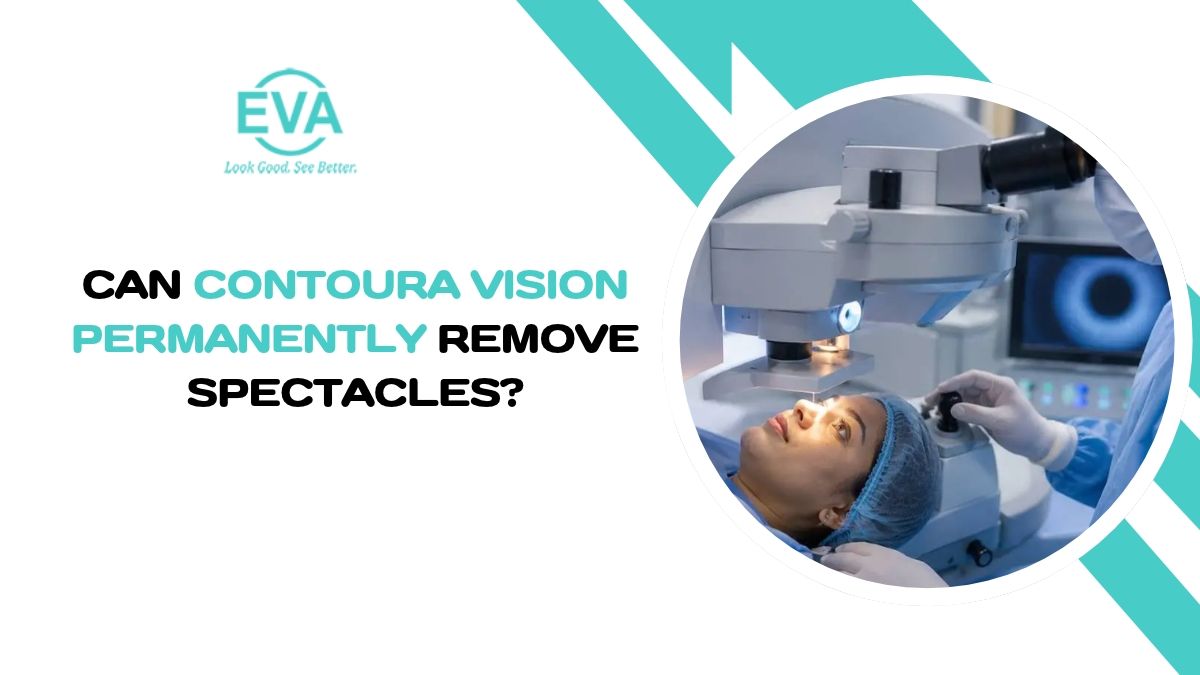
Contoura Vision is an advanced laser vision correction procedure designed to reduce or eliminate dependence on spectacles and contact lenses. Many people who wear glasses for myopia (near-sightedness), hyperopia (far-sightedness), or astigmatism consider this treatment to achieve clearer vision without corrective lenses. However, one common question remains: Can Contoura Vision permanently remove spectacles?
The answer is that Contoura Vision can provide long-lasting spectacle independence for many suitable candidates. However, permanent results cannot be guaranteed for everyone. The outcome depends on several factors, including eye health, corneal thickness, refractive error, age, and individual healing responses.
Understanding how the procedure works, its benefits, limitations, and suitability can help you make an informed decision before choosing laser vision correction.
What Is Contoura Vision?
Contoura Vision is an advanced form of topography-guided LASIK surgery that uses detailed measurements of the cornea to create a personalised treatment plan. Unlike conventional laser procedures that primarily correct refractive errors, this technology also maps tiny irregularities on the corneal surface.
The cornea is the transparent front layer of the eye that helps focus light onto the retina. Even minor irregularities in its shape can affect visual clarity. Contoura Vision identifies these variations and uses customised laser treatment to reshape the cornea more precisely.
People considering Contoura Vision in Delhi often explore this procedure because it combines refractive correction with detailed corneal mapping. The treatment aims to improve visual quality while reducing dependence on glasses or contact lenses.
Can Contoura Vision Permanently Remove Spectacles?
Yes, Contoura Vision can significantly reduce or eliminate the need for spectacles in many eligible patients. The laser reshapes the cornea to correct the refractive error, allowing light to focus more accurately on the retina.
Once the cornea has healed and stabilised, the correction is generally long-lasting. However, it is important to understand that laser vision correction does not stop the natural ageing process of the eyes.
For example, Contoura Vision can correct existing myopia by adjusting the corneal curvature. It can also improve farsightedness in suitable candidates and correct astigmatism caused by irregular corneal curvature. Many patients experience improved vision and reduced dependence on spectacles for everyday activities.
Although the laser correction is designed to be permanent, some individuals may experience changes in their eyesight over time. Therefore, the results vary from person to person.
How Does Contoura Vision Work?
Contoura Vision uses advanced diagnostic technology and an excimer laser to personalise vision correction.
The procedure generally involves the following steps:
1. Detailed Eye Examination
Before surgery, the eye specialist evaluates your prescription, corneal thickness, corneal shape, pupil size, tear film, and overall eye health.
2. Corneal Topography Mapping
Advanced imaging technology creates a detailed map of the corneal surface. This helps identify small irregularities that may influence visual quality.
3. Personalised Laser Treatment
Based on the diagnostic measurements, the laser treatment is planned according to the patient's individual corneal characteristics and refractive error.
4. Corneal Reshaping
The laser carefully removes microscopic amounts of corneal tissue to modify its curvature and improve how light focuses on the retina.
5. Recovery and Follow-Up
Patients are advised to follow post-operative instructions and attend scheduled examinations to monitor healing and visual improvement.
What Are the Benefits of Contoura Vision?
Contoura Vision offers several potential advantages for individuals who want to reduce their dependence on spectacles.
1. Personalised Vision Correction
The procedure uses detailed corneal mapping to create a customised treatment plan rather than relying only on a standard glasses prescription.
2. Reduced Dependence on Spectacles
Many suitable patients can perform everyday activities without regularly wearing glasses or contact lenses after recovery.
3. Correction of Corneal Irregularities
The technology considers corneal surface variations during treatment, which may help improve visual quality in appropriately selected patients.
4. Quick Procedure
The laser treatment itself generally takes only a short time. However, the complete appointment includes preparation, examination, and post-operative instructions.
5. Faster Visual Recovery
Many patients notice improved vision within the first few days, although complete visual stabilisation may take longer.
6. Improved Convenience
Reduced dependence on spectacles can make activities such as travelling, exercising, working, and participating in sports more convenient.
Who Is an Ideal Candidate for Contoura Vision?
Not everyone who wears glasses is automatically suitable for Contoura Vision. A comprehensive eye examination is necessary to determine whether the procedure is appropriate.
Generally, suitable candidates may include individuals who:
- Are at least 18 years old.
- Have a stable spectacle prescription, usually for at least one year.
- Have adequate corneal thickness.
- Have a corneal shape suitable for laser correction.
- Do not have certain untreated eye conditions.
- Have realistic expectations about surgical outcomes.
People with thin corneas, keratoconus, severe dry eyes, unstable prescriptions, or certain other eye conditions may require alternative treatments.
An experienced eye specialist can evaluate these factors before recommending surgery.
How Long Do Contoura Vision Results Last?
The corneal reshaping performed during Contoura Vision is generally long-lasting because the laser permanently changes the corneal tissue.
However, long-term spectacle independence depends on several factors.
Age-Related Vision Changes: After approximately 40 years of age, many people develop presbyopia, a natural condition that makes near vision difficult. Reading glasses may become necessary even after successful laser surgery.
Changes in Eye Prescription: Some individuals may experience residual or recurrent refractive errors over time.
Natural Eye Ageing: Conditions such as cataracts can affect vision later in life. Contoura Vision does not prevent cataract development.
Individual Healing: Every person's eyes respond differently to laser treatment, which can influence the final visual outcome.
Therefore, patients should understand that Contoura Vision offers long-lasting correction of existing refractive errors but cannot guarantee perfect eyesight throughout life.
Are There Any Risks or Side Effects?
Like other laser eye procedures, Contoura Vision has potential side effects and risks. Although many patients recover without significant complications, understanding possible concerns is important.
Some temporary side effects include:
- Dryness or irritation in the eyes.
- Mild light sensitivity.
- Glare or halos around lights, particularly at night.
- Temporary fluctuations in vision.
- Difficulty seeing clearly in low-light conditions.
Rare complications may include infection, corneal healing problems, or corneal ectasia (progressive weakening and bulging of the cornea).
A proper pre-operative assessment and regular follow-up appointments help reduce risks and identify complications early.
Contoura Vision vs Traditional LASIK: What Is the Difference?
Contoura Vision and traditional LASIK are both laser vision correction procedures designed to correct refractive errors, but they differ in their treatment approaches. Contoura Vision uses topography-guided technology that creates a detailed map of the cornea to identify surface irregularities and customise the laser treatment. Traditional LASIK generally focuses on correcting refractive errors using prescription-based measurements, although the exact technology and diagnostic methods can vary between treatment systems.
Another important difference is treatment planning. Contoura Vision uses detailed corneal topography to develop a personalised treatment approach, while conventional LASIK primarily relies on refractive measurements to determine the required correction. The main objective of both procedures is to improve vision and reduce dependence on spectacles. However, Contoura Vision also considers certain corneal irregularities during treatment planning. The suitability of either procedure depends on factors such as corneal thickness, eye health, prescription stability, and individual corneal characteristics.
It is important to remember that advanced technology does not automatically make one procedure suitable for everyone. An eye specialist can recommend the most appropriate treatment after conducting a comprehensive examination.
How Much Does Contoura Vision Cost in Delhi?
The cost of Contoura Vision in Delhi can vary depending on several factors, including:
- Technology and equipment used by the eye centre.
- Experience of the treating ophthalmologist.
- Pre-operative diagnostic examinations.
- Type of laser treatment recommended.
- Post-operative care and follow-up services.
Patients should compare treatment quality, diagnostic facilities, surgeon experience, and aftercare rather than choosing a procedure based only on price.
Before making a decision, ask for a detailed cost estimate and understand what services are included in the treatment package.
Conclusion
Contoura Vision can be an effective option for people who want to reduce or eliminate their dependence on spectacles. Its personalised corneal mapping and laser correction technology help address refractive errors while considering individual corneal irregularities.
Although the results are generally long-lasting, no laser procedure can guarantee perfect vision permanently. Age-related changes and other eye conditions may still affect eyesight in the future.
If you are considering Contoura Vision in Delhi, consult an experienced eye specialist for a comprehensive evaluation. A proper assessment of your corneal thickness, eye health, and prescription will help determine whether this procedure is suitable for your vision correction needs.
Frequently Asked Questions (FAQs)
1. Is Contoura Vision a permanent solution for spectacles?
Contoura Vision provides long-lasting correction by reshaping the cornea. However, age-related changes, residual refractive errors, or other eye conditions may affect vision in the future.
2. Can Contoura Vision correct both eyes?
Yes, Contoura Vision is commonly performed on both eyes during the same surgical session when the patient is medically suitable. The surgeon determines the appropriate treatment plan after examination.
3. How many days does it take to recover from Contoura Vision?
Many patients notice improved vision within 24–48 hours. However, complete healing and visual stabilisation may take several weeks.
4. Is Contoura Vision painful?
The procedure is generally painless because numbing eye drops are used. Some patients may experience mild irritation or discomfort after surgery.
5. Can spectacles be required again after Contoura Vision?
Yes, although the initial correction is long-lasting, some people may need glasses later due to presbyopia, natural prescription changes, or other eye conditions.
6. Is Contoura Vision better than regular LASIK?
Contoura Vision offers topography-guided treatment planning, which may provide additional benefits for selected patients. However, the most suitable procedure depends on individual corneal measurements and eye health.